Apple Watch Ultra 2 vs Samsung Galaxy Watch 6: AI Smartwatch Showdown
These are the two most capable AI smartwatches you can buy — but they're built for completely different users. Here's how to decide which one belongs on your wrist.
By AI Wearable Hub Editorial Team · Published · Updated
Affiliate Disclosure: AI Wearable Hub participates in the Amazon Associates program. Links on this page may earn us a commission at no extra cost to you. Prices are from Amazon and subject to change. Editorial opinions are independent.
Quick Verdict
If you own an iPhone and push physical limits regularly, Apple Watch Ultra 2 is worth every dollar of its $799 price. For Android users — or anyone who wants excellent AI health monitoring without the extreme-sport premium — Samsung Galaxy Watch 6 Classic is the more rational choice at $429.99, with rotating bezel navigation that feels genuinely better than scrolling a touchscreen.
Who These Watches Are Really For
Apple Watch Ultra 2 and Samsung Galaxy Watch 6 Classic are both excellent smartwatches, but they're designed for different users with different priorities. The Ultra 2 is an adventure watch that also happens to be a health monitor. The Galaxy Watch 6 Classic is a health monitor that also happens to be a sophisticated smartwatch. Understanding that distinction before you spend a dollar will save you from the wrong choice.
Design & Build Quality
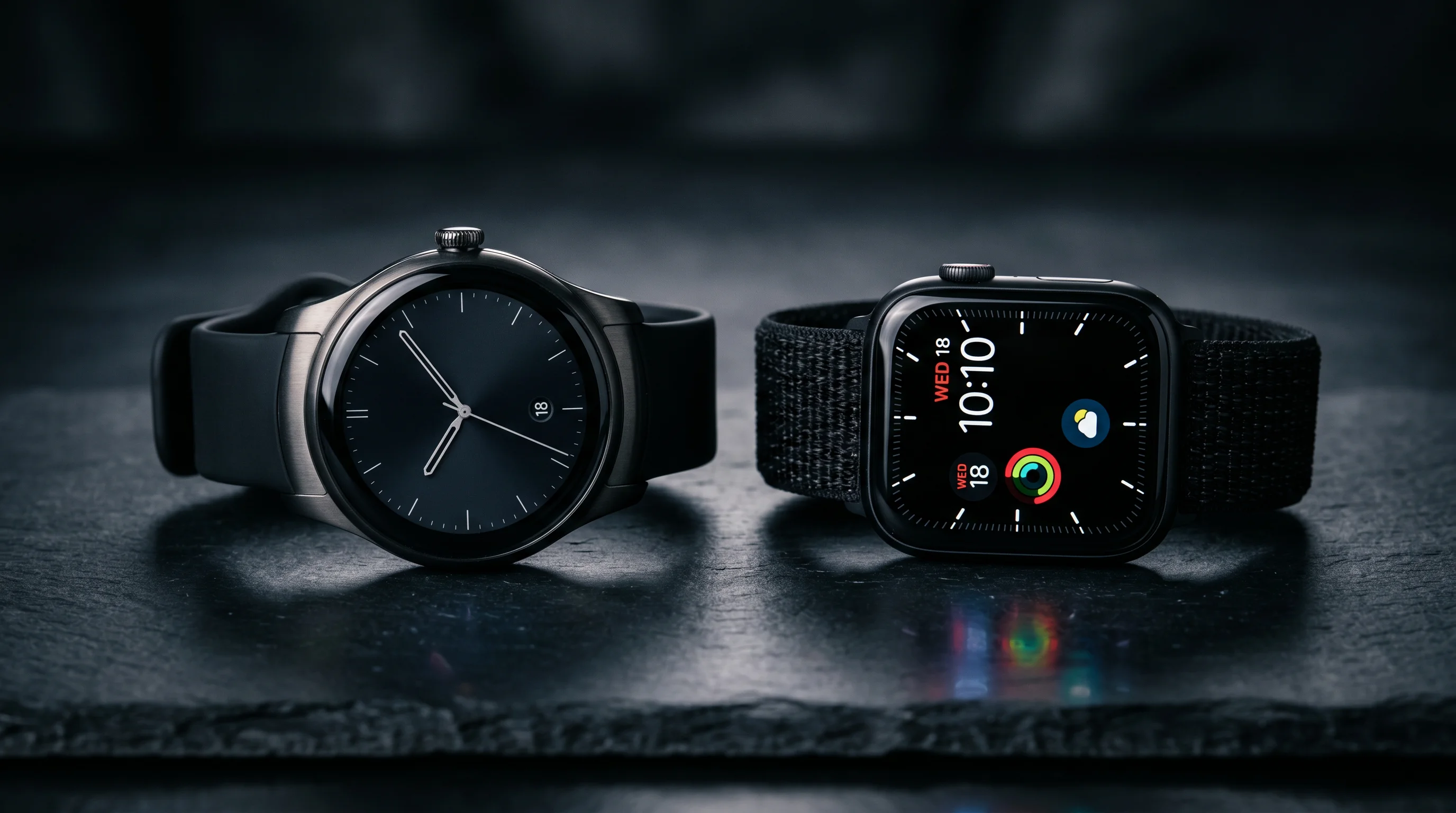
Apple Watch Ultra 2's 49mm titanium case is visually substantial — this is not a discreet watch. The flat titanium edges, orange action button, and prominent crown communicate tool rather than accessory, which many wearers appreciate and others find too large. The sapphire crystal front glass has survived real-world abuse that would crack lesser materials. On the wrist, the weight is noticeable but not uncomfortable for daily wear.
Samsung Galaxy Watch 6 Classic's 47mm stainless steel case with the rotating physical bezel is a more traditional watch proposition. The bezel click is satisfying in a way that purely touchscreen navigation isn't, and the classic round dial reads more naturally as a watch to non-tech observers. It's noticeably more wearable in formal settings where the Ultra 2 would look incongruous.
AI Health Features: Where Each Leads
Apple Watch Ultra 2 brings watchOS's mature health monitoring suite: ECG with AFib detection, blood oxygen monitoring, crash detection, fall detection, retrospective health trends, and cardio fitness (VO2 max) estimates. The AI components — irregular rhythm notifications, trend analysis, and health summaries — are powered by years of accumulated data science from Apple's research partnerships. The Vitals app in watchOS shows overnight health metrics in a single, glanceable view each morning.
Samsung Galaxy Watch 6 Classic adds BIA body composition analysis — a meaningful differentiator. By sending a low-level electrical current through your body, it estimates muscle mass, body fat percentage, and hydration level. The AI sleep coaching is the other standout: over three to four weeks, it builds a personal sleep profile and delivers recommendations that are specific to your patterns rather than generic sleep hygiene advice. In practice, the coach identified a late-caffeine sensitivity pattern within two weeks of wearing the watch — the kind of personalized insight that takes considerably longer to notice manually.
GPS Accuracy: A Genuine Difference
Apple Watch Ultra 2's dual-frequency GPS (L1 + L5) is not a marketing differentiator — it's a meaningful real-world improvement for outdoor athletes. Standard GPS struggles in urban canyons, dense forests, and mountainous terrain where satellite signals bounce off surfaces and create position errors. L5 signals are more resistant to this multipath interference, which means the Ultra 2's trail maps are measurably more accurate than any single-frequency competitor. For road running in open environments, the difference is minimal. For trail running, hiking, or cycling in complex terrain, it matters.
Samsung Galaxy Watch 6 Classic uses standard GPS/GLONASS, which is accurate for most use cases but can show the characteristic "GPS drift" artifacts in challenging environments.
Battery Life in Practice
Apple Watch Ultra 2 targets 36 hours in standard smartwatch mode — enough for most users to go two days between charges. Low Power Mode extends this to 60 hours, which is genuinely useful for multi-day camping trips or ultramarathons. The constraint is that Low Power Mode disables most smart features, so you're essentially wearing a GPS watch with health monitoring rather than a full smartwatch.
Samsung Galaxy Watch 6 Classic hits roughly 40 hours in typical use with the always-on display disabled — slightly better than the Ultra 2's standard mode. Neither watch breaks the every-other-day charging ceiling that has defined flagship smartwatches for years. If battery life is your primary concern, Garmin Venu 3's 14-day performance is in a different category entirely.
Ecosystem Reality Check
Apple Watch Ultra 2 requires an iPhone. Full stop. If you use an Android phone — any Android phone — you cannot use this watch. This is a hard constraint, not a soft preference.
Samsung Galaxy Watch 6 Classic works with any Android phone running Android 10 or later, but many features are Galaxy-exclusive: the full Samsung Health integration, BIA body composition analysis, and some advanced health metrics function best or exclusively with a Galaxy smartphone. It's compatible but not fully featured on non-Samsung Android phones.
Value Assessment
At $799, Apple Watch Ultra 2 is a specialized tool for a specific user. The dual-frequency GPS, 60-hour battery, depth sensor, titanium construction, and emergency siren are genuine differentiators — but only if you regularly need them. Most Apple Watch users are better served by Series 10 at $399 or SE at $249.
Samsung Galaxy Watch 6 Classic at $429.99 competes more directly with Apple Watch Series 10. For Android users, it's the most complete smartwatch experience available, with BIA body composition as a unique feature no Apple Watch currently offers.
Who Should Buy Which
Choose Apple Watch Ultra 2 if: You own an iPhone, engage in trail running, mountaineering, triathlon, or diving, and want the best GPS accuracy and longest battery available in a smartwatch.
Choose Samsung Galaxy Watch 6 Classic if: You use an Android phone (especially a Galaxy device), want body composition tracking, prefer a classic rotating bezel design, and don't need extreme-sport durability features.
Prices sourced from Amazon and subject to change. Platform compatibility verified at time of publication.
Products Covered
- Apple Watch Ultra 2 — $569.32 by Apple
- Samsung Galaxy Watch 6 Classic — $364.99 by Samsung
Amazon links are affiliate links (paid links). As an Amazon Associate we earn from qualifying purchases.
Frequently Asked Questions
Does Apple Watch Ultra 2 work with Android phones?
No. Apple Watch requires an iPhone running iOS 17 or later. It cannot pair with Android devices. If you use an Android phone, the Samsung Galaxy Watch 6 or Google Pixel Watch 3 are the appropriate alternatives.
Is the Apple Watch Ultra 2 worth the extra cost over a standard Apple Watch?
The Ultra 2's premium over Apple Watch Series 10 ($399) is substantial — roughly $400 more. It's worth it if you regularly push physical limits: trail running, diving, mountaineering, or triathlons. The dual-frequency GPS, emergency siren, depth sensor, and 60-hour battery in low-power mode address real needs for serious outdoor athletes. For general fitness and daily health tracking, Series 10 or SE provides most of the value at a fraction of the price.
Which smartwatch has better AI health features?
Both are excellent, but for different metrics. Apple Watch Ultra 2 excels at ECG, irregular rhythm notifications, blood oxygen, crash detection, and fall detection — all with established FDA clearances. Samsung Galaxy Watch 6 adds BIA body composition analysis and AI-powered personalized sleep coaching that genuinely improves recommendations over weeks of wear. Apple's health ecosystem and historical data continuity give it an edge for long-term health trend analysis.
How long does battery last on the Apple Watch Ultra 2 vs Galaxy Watch 6?
Apple Watch Ultra 2 lasts up to 36 hours in standard mode and up to 60 hours in Low Power Mode — far ahead of any other Apple Watch. Samsung Galaxy Watch 6 Classic lasts up to 40 hours in typical use with the always-on display off. For multi-day adventures without charging access, the Ultra 2's Low Power Mode is the practical winner.