Meta Ray-Ban Smart Glasses Review (2026): Are They Actually Useful?
The Meta Ray-Ban Smart Glasses (2nd Gen) are the most complete AI glasses you can buy right now, with all-day battery and a genuinely useful AI assistant — but privacy tradeoffs and a $379 price tag deserve serious consideration.
By AI Wearable Hub Editorial Team · Published
Affiliate Disclosure: AI Wearable Hub is reader-supported. We participate in the Amazon Associates program — if you buy through links on this page, we may earn a commission at no extra cost to you. We research these products independently, and our editorial opinions are our own.
Quick Verdict
The Meta Ray-Ban Smart Glasses (2nd Gen) earn a 8.5 / 10. They are the most capable AI glasses available at a mainstream price point, combining near-all-day battery life, a respectable 3K camera, open-ear stereo audio, and a Meta AI assistant that has evolved from party trick to practical tool. At $379 they cost $80 more than the first generation launched at, and anyone already owning a functional Gen 1 pair can likely skip. For everyone else -- new buyers, upgraders whose original battery has aged out, or anyone curious about AI glasses for the first time -- these are the ones we recommend. Check current price on Amazon.
How We Evaluate AI Glasses
We weight five criteria when reviewing AI glasses: real-world battery life (not just rated figures), audio quality in actual ambient conditions, camera usability including framing and image quality, the practical value of any AI assistant features, and comfort over multi-hour wear. For a device you are supposed to put on in the morning and take off at night, comfort and battery are non-negotiable. AI feature depth and camera quality determine whether these glasses earn a place in your daily routine or become a novelty in a drawer.
Prices shown are sourced from Amazon at time of writing and update automatically when our price tracker detects changes. We never invent product specs or copy customer review text.
Pros and Cons
Pros
- All-day battery: manufacturer specifies up to 8 hours typical use, nearly double Gen 1
- Frames look identical to regular Ray-Bans -- genuinely wearable in public
- 3K Ultra HD video at up to 60fps, a meaningful upgrade over first-gen 1080p
- Meta AI is legitimately useful: live translation, object ID, hands-free calls
- No subscription required for core features
- Charging case adds up to 48 more hours of battery on the go
- Five-microphone array delivers surprisingly good call quality
- IPX4 rating handles sweat and light splashes
Cons
- $379 is $80 more than Gen 1's launch price for a modest hardware refresh
- Open-ear speakers cannot compete with noise-cancelling earbuds in loud environments
- No viewfinder: framing shots requires practice and guesswork
- Live translation limited to 6 languages vs 70+ for Google Translate
- Meta uses AI chat interactions for targeted ads in the US -- no opt-out
- Privacy concerns: voice recordings stored in cloud by default
- Heavy AI use and live translation drain battery significantly faster
- Not a compelling upgrade for existing Gen 1 owners
What Are the Meta Ray-Ban Smart Glasses?
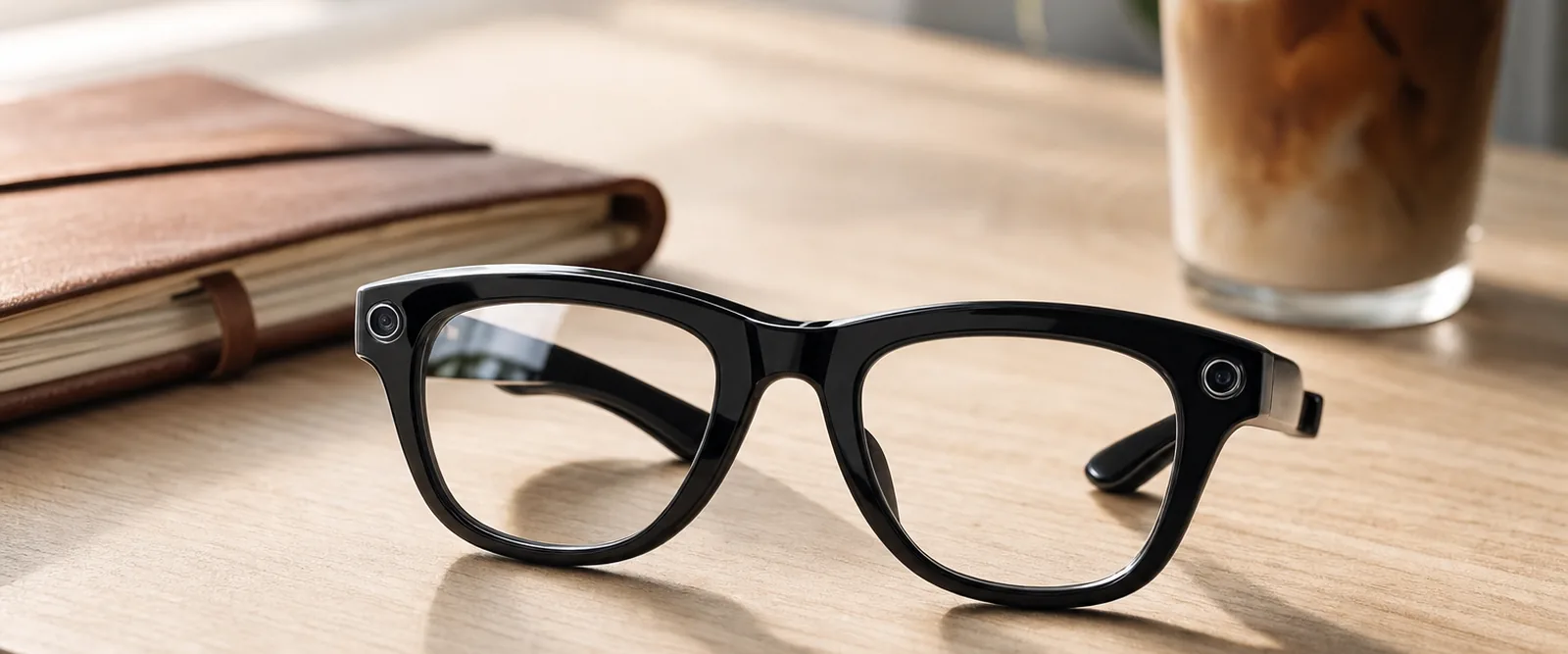
The Meta Ray-Ban Smart Glasses (2nd Gen) are a collaboration between Meta and EssilorLuxottica, built into genuine Ray-Ban frames. They launched in September 2025 at $379, available in Wayfarer, Skyler, and Headliner silhouettes across a range of lens options including clear, polarized, Transitions, and prescription. The core hardware is the same formula as the original 2023 model -- a 12MP ultrawide camera in the left temple, open-ear stereo speakers in both temples, five microphones, and Bluetooth connectivity to the Meta AI companion app -- but with two meaningful internal upgrades: a substantially longer battery and a higher-resolution video camera. These are not AR glasses; there is no display in the lens. What you get is closer to a very capable pair of wireless headphones that also happen to shoot photos and video, with a voice-activated AI assistant ready on demand. For a deeper look at how they compare to display-equipped alternatives, see our best AI smart glasses of 2026 roundup.
The second generation represents what Meta describes as a focus on the two most-requested improvements: battery life and video quality. Everything else -- the shape, the weight (approximately 52 grams, up from 49.2g in Gen 1 according to independent testing), the frame dimensions, the IPX4 water resistance -- remains essentially unchanged. That is not a criticism so much as a design philosophy: if the thing looks like normal glasses, people will actually wear it.
How They Feel Day-to-Day
The best compliment we can pay the Meta Ray-Bans is that after a few days, you stop thinking about the fact that they are smart glasses at all. The Wayfarer frame is an iconic silhouette that reads as completely normal eyewear to anyone who sees you wearing it. That social invisibility matters more than any spec sheet entry. Reviewers at Wired raised a fair point about the discreet camera creating an uncomfortable dynamic -- the glasses can record without anyone nearby realizing it -- and that is a real ethical question worth sitting with before you buy. There is an LED indicator that illuminates when the camera is active, but it is subtle enough that most people will not notice it.
Day-to-day use settles into a comfortable rhythm: you put them on, connect to Bluetooth, and they become a persistent audio layer over your day. Navigation directions, incoming call notifications, music from Spotify, and quick AI queries all route through the open-ear speakers without requiring you to reach for your phone. The five-microphone array is good enough that, as CNET notes, people on calls generally do not realize you are speaking through glasses. That is a higher bar than most Bluetooth accessories clear. The tradeoff is that open-ear audio means people near you can hear what you are listening to at moderate volumes, and in genuinely loud environments -- a subway, a concert -- the speakers simply cannot overcome the ambient noise. If high-isolation listening matters to you, a pair of noise-cancelling earbuds from our AI earbuds category will serve you better for audio alone.
Meta AI Features
This is where the second generation of Ray-Ban Meta glasses makes the strongest argument for its own existence -- not because of any hardware change, but because Meta AI has improved substantially since the first generation launched in 2023. Two years of iteration have produced an assistant that can now do things that feel genuinely useful rather than just impressive in a demo.
Live translation is the standout feature. The glasses support real-time translation across six languages: English, French, German, Italian, Portuguese, and Spanish. The Engadget reviewer used it on a walking tour in Argentina and found it capable enough to follow along with a Spanish-language guide -- imperfect for extended monologues, but functional for conversational back-and-forth. Six languages is a real limitation compared to Google Translate's 70-plus, but for common European travel scenarios it covers most cases.
Visual AI -- asking the glasses what they are looking at -- has also matured. Tom's Guide found it could identify fruit varieties with enough precision to tell you which apple cultivar was in front of it, including whether it was better for pies or eating fresh. Object identification, landmark recognition, and reading signs in foreign languages all work without requiring you to take out your phone. The Live AI mode -- a continuous real-time conversation with Meta AI about your visual surroundings -- still feels more like a technology demo than a daily workflow tool, but accessibility applications are where this shines: the Be My Eyes integration for users with visual impairments is a genuine use case that deserves recognition.
Celebrity AI voices -- Awkwafina, John Cena, Keegan-Michael Key, Kristen Bell -- are a fun optional layer that makes the assistant feel less robotic. Upcoming features teased at Meta Connect 2025 include Conversation Focus (amplifying the voice of whoever you are speaking to while dampening background noise), third-party integrations with Twitch and Disney Parks, and the 18Birdies golf app. These are not yet available at time of writing, but they suggest Meta is actively expanding the platform. For a broader look at whether AI wearables are delivering on their promises in 2026, see our are AI wearables worth it analysis.
Battery and Charging
Battery life is the headline upgrade in the second generation, and it largely delivers. Meta specifies up to 8 hours of typical use on a single charge. The Verge reviewer started a full charge at 9 AM and reached 9 percent battery at roughly 9 PM -- a 12-hour day of mixed use including photos, podcast listening, and occasional AI queries. That is an impressive real-world result. The Engadget reviewer squeezed 5.5 hours of continuous music playback, which is a more demanding scenario and still a solid number for open-ear glasses. Wired found the figure drops to around 5 or 6 hours under continuous use, and less when recording sustained 3K video.
The caveat is feature-specific drain: live translation is a significant battery killer according to multiple reviewers. If you are relying on translation for hours at a time, plan to top up at some point in the day. The charging case -- which is compact enough to slip in a jacket pocket -- provides an additional 48 hours of charge on the go, up from 32 hours in the first-generation case. Fast charging brings the glasses to 50 percent in 20 minutes. For most users, the combination of the glasses' internal battery and the case should make it through an international travel day without anxiety.
Camera and Audio
The camera upgrade in Gen 2 is real but comes with an asterisk. The sensor remains a 12MP ultrawide -- still photos are captured at 3,024 x 4,032 pixels, the same as Gen 1. What changed is video: the second generation now records 3K Ultra HD at up to 60fps, more than doubling the pixel count of the first generation's 1080p footage. CNET notes that 3K is not the default setting -- you need to switch to it in the Meta AI app -- which is an odd choice that will mean many buyers never realize they have it. Still photo quality is good in full light but tends to wash out saturated colors; Tom's Guide found reds in particular came out paler than reality. The ultrawide lens means you cannot zoom, and without a viewfinder of any kind, framing anything requires practice. You will take several shots and hope one works.
A maximum clip length of 3 minutes per recording is another limitation flagged by Wired -- fine for casual moments, frustrating if you want to capture a continuous event. Upcoming hyperlapse and slow-motion modes should add creative flexibility when they arrive.
Audio is strong for the category. Two open-ear stereo speakers produce what TechRadar describes as louder with less sound leakage compared to the first generation. Tom's Guide found music clear with adequate bass -- not wireless earbud quality, but genuinely listenable. The five-microphone array automatically adjusts output volume based on ambient noise levels (increasing it in wind, for example), which is a thoughtful touch. These speakers are not a replacement for dedicated earbuds, but they are better than most smart glasses audio we have heard. Check the deals page to see whether the glasses or a compatible earbud combo are currently on sale.
Build and Comfort
The build quality is what you would expect from a genuine Ray-Ban product made by EssilorLuxottica. The frames are solid, the hinges feel durable, and nothing about the glasses suggests they will not survive normal daily use. The IPX4 water resistance rating means they can handle rain, sweat, and accidental splashes -- appropriate for glasses you might wear on a run or bike ride, though we would not take them into the ocean.
Comfort over extended wear is generally good but not universal. The second generation weighs approximately 52 grams -- 2.8 grams more than the 49.2-gram first generation due to the larger battery and improved camera hardware -- which is noticeable compared to regular optical frames but unremarkable for smart glasses. Tom's Guide found the standard Wayfarer slightly tight and recommends trying frames in a store before buying if fit matters to you. The Wayfarer, Skyler, and Headliner silhouettes each have different proportions, and the Headliner is widely noted as the most flattering for narrower faces. Compared to the bulkier XREAL Air 2, which we cover in our Meta Ray-Ban vs XREAL Air 2 comparison, the Ray-Bans are dramatically more wearable for all-day use.
Software and Ecosystem
The glasses pair with the Meta AI app on iOS and Android, which handles firmware updates, camera settings, AI assistant configuration, and media management. The app has matured considerably since the first generation and is generally reliable. The glasses also integrate natively with Instagram for direct sharing, and Meta has announced additional third-party integrations in progress.
The privacy picture is more complicated. Meta changed its US policy so that users can no longer opt out of having voice recordings stored in the cloud (manual deletion remains possible through the app). AI chat interactions are used to serve targeted ads in the United States -- a practice Google's Gemini does not engage in, and which Alexa allows users to disable for third-party uses. Tom's Guide called this policy out explicitly as a reason to temper enthusiasm. Images and videos captured by the camera are not used to train Meta's AI models or serve ads, but the audio data situation is less comfortable. European and South Korean users benefit from stricter privacy protections under local law. This is not a dealbreaker, but it is a tradeoff worth understanding before you hand Meta a persistent audio feed of your daily life.
Value
At $379, the Meta Ray-Ban Smart Glasses (2nd Gen) are currently priced $80 above the first generation's original launch price and above where the Gen 1 model now sits at $299. The upgrade is real -- the battery life improvement alone is significant for anyone who found Gen 1 running out of steam by afternoon -- but it is incremental rather than transformational. The most important software improvements (Meta AI updates, new camera modes, third-party integrations) are being backported to Gen 1 frames, which blunts the argument for upgrading.
For a first-time buyer, $379 is reasonable for what you get: a stylish pair of glasses that can handle music, calls, photos, video, and AI queries all day on a single charge without looking like technology. Compared to the XREAL Air 2 at $449 or the Vuzix Blade 2 at $599 -- both of which require a tethered phone or laptop and look unmistakably like tech hardware -- the Ray-Bans offer a very different value proposition centered on daily wearability. If you want to explore the full landscape before deciding, our AI glasses category page covers every option we have tested. Check the current price on Amazon.
Who Should Buy / Who Should Skip
Buy if you:
- Are new to AI glasses and want the most wearable, socially acceptable option available
- Travel frequently and would genuinely use live translation across European languages
- Find yourself constantly reaching for your phone for navigation, music, and quick questions
- Want a camera you can use without pulling out your phone, and can live without a viewfinder
- Own a Gen 1 pair whose battery has significantly degraded after two-plus years of use
Skip if you:
- Already own a fully functional Gen 1 pair -- the software improvements are largely being backported
- Need more than 6 languages for translation
- Are privacy-sensitive about audio data and Meta's ad targeting practices
- Want immersive AR or a heads-up display -- these glasses have no screen
- Primarily want high-quality audio -- dedicated wireless earbuds will outperform open-ear speakers at this price
FAQ
What is the battery life on the Meta Ray-Ban Smart Glasses Gen 2?
Meta specifies up to 8 hours of typical use on a single charge. In independent testing by Engadget, continuous music playback lasted a little over 5.5 hours. The Verge found roughly 12 hours of mixed daily use before the battery hit single digits. The charging case adds up to 48 hours of on-the-go power, and fast charging delivers 50 percent capacity in 20 minutes.
What camera resolution do the Meta Ray-Ban Gen 2 glasses have?
The glasses use a 12-megapixel ultrawide sensor. Still photos are 3,024 x 4,032 pixels (12MP). Video has been upgraded to 3K Ultra HD at up to 60fps, a significant step up from the first generation's 1080p. Note that 3K is not enabled by default -- you need to activate it in the Meta AI app settings, as CNET points out.
Do the Meta Ray-Ban Smart Glasses need a subscription?
No ongoing subscription is required for core features including Meta AI, hands-free calls, music, and camera capture. Meta AI is included at no extra cost. Some upcoming third-party integrations may have their own fees, but the glasses themselves do not carry a monthly charge.
Are the Meta Ray-Ban Gen 2 glasses water resistant?
Yes. The glasses carry an IPX4 water-resistance rating, the same as the first generation. They handle splashes, rain, and sweat but should not be submerged. IPX4 is adequate for outdoor use and exercise.
Can Meta Ray-Ban glasses do real-time translation?
Yes. Meta AI supports live translation across six languages: English, French, German, Italian, Portuguese, and Spanish. It works best in conversational back-and-forth rather than extended monologues, and extended translation use drains the battery faster than typical listening or calling, according to Engadget's field testing.
How do the Meta Ray-Ban Gen 2 glasses compare to the XREAL Air 2?
They serve different use cases. The Meta Ray-Ban Gen 2 are all-day AI glasses in normal-looking frames, focused on audio, camera, and voice AI. The XREAL Air 2 ($449) project a large virtual display and are designed primarily for consuming media or working tethered to a phone or laptop. The Ray-Bans win on wearability and social acceptability; the XREAL Air 2 win on visual capability. Our full comparison breaks down every dimension.
Should I upgrade from Meta Ray-Ban Gen 1 to Gen 2?
Probably not, unless your Gen 1 battery has significantly degraded. Engadget and The Verge both note that most of the compelling software improvements are being backported to Gen 1. The hardware differences -- 3K video and longer battery -- are meaningful but not dramatic enough to justify $379 on top of a functional existing pair.
Bottom Line
The Meta Ray-Ban Smart Glasses (2nd Gen) are the best AI glasses for everyday wear that you can buy in 2026. The combination of genuinely normal-looking frames, near-all-day battery, solid open-ear audio, and an increasingly capable Meta AI assistant creates a product that earns a place in your daily routine rather than a shelf in your closet. The privacy tradeoffs -- particularly Meta's ad-targeting use of voice interactions in the US -- are real and should factor into your decision. But if you can accept that data relationship, or if you are in a jurisdiction with stronger protections, there is nothing else at this price that comes close. For first-time buyers, our recommendation is clear. For Gen 1 owners whose glasses are still running well, save the money. Our editorial team has been tracking AI glasses since the Google Glass era, and the Meta Ray-Bans are the first pair that felt genuinely worth wearing every day rather than occasionally for novelty. Check the Meta Ray-Ban Smart Glasses on Amazon.
Products Covered
- Meta Ray-Ban Smart Glasses (2nd Gen) — $379.00 by Meta
Amazon links are affiliate links (paid links). As an Amazon Associate we earn from qualifying purchases.
Frequently Asked Questions
What is the battery life on the Meta Ray-Ban Smart Glasses Gen 2?
Meta specifies up to 8 hours of typical use on a single charge. In independent testing by Engadget, continuous music playback lasted a little over 5.5 hours. The included charging case provides an additional 48 hours of battery top-ups on the go. Fast charging brings the glasses to 50 percent in 20 minutes.
What camera resolution do the Meta Ray-Ban Gen 2 glasses have?
The glasses use a 12-megapixel ultrawide sensor. Still photos are captured at 3,024 x 4,032 pixels (12MP). Video recording has been upgraded to 3K Ultra HD (up to 60fps) from the first generation's 1080p. Note that 3K is not the default setting — you need to enable it in the Meta AI app.
Do the Meta Ray-Ban Smart Glasses need a subscription?
No ongoing subscription is required to use the core features including Meta AI, hands-free calls, music, and camera. Meta AI is included at no extra cost. Some third-party integrations may have their own costs, but the glasses themselves do not carry a monthly fee.
Are the Meta Ray-Ban Gen 2 glasses water resistant?
The Meta Ray-Ban Smart Glasses carry an IPX4 water-resistance rating, the same as the first generation. That means they can handle splashes and sweat but should not be submerged or used in heavy rain.
Can Meta Ray-Ban glasses do real-time translation?
Yes. Meta AI on the glasses supports live translation across six languages: English, French, German, Italian, Portuguese, and Spanish. The feature works best in conversational back-and-forth rather than extended monologues, and heavy use will drain the battery significantly faster than normal.
How do the Meta Ray-Ban Gen 2 glasses compare to the XREAL Air 2?
They serve different purposes. The Meta Ray-Ban Gen 2 are daily-wear AI glasses focused on audio, camera, and voice AI in a normal-looking frame. The XREAL Air 2 are display-forward AR glasses designed to project a large virtual screen, typically used tethered to a phone or laptop. The Ray-Bans are more wearable all day; the XREAL Air 2 are more powerful but bulkier.
Should I upgrade from Meta Ray-Ban Gen 1 to Gen 2?
Probably not, unless your Gen 1 battery is significantly degraded. Many of the best software features — including Meta AI updates, new camera modes, and third-party integrations — are being backported to Gen 1 as well. The hardware differences (3K video, longer battery) are real but not dramatic enough to justify $379 if you already own a functional pair.