Oura Ring Gen 3 vs Samsung Galaxy Ring: Which Smart Ring Wins?
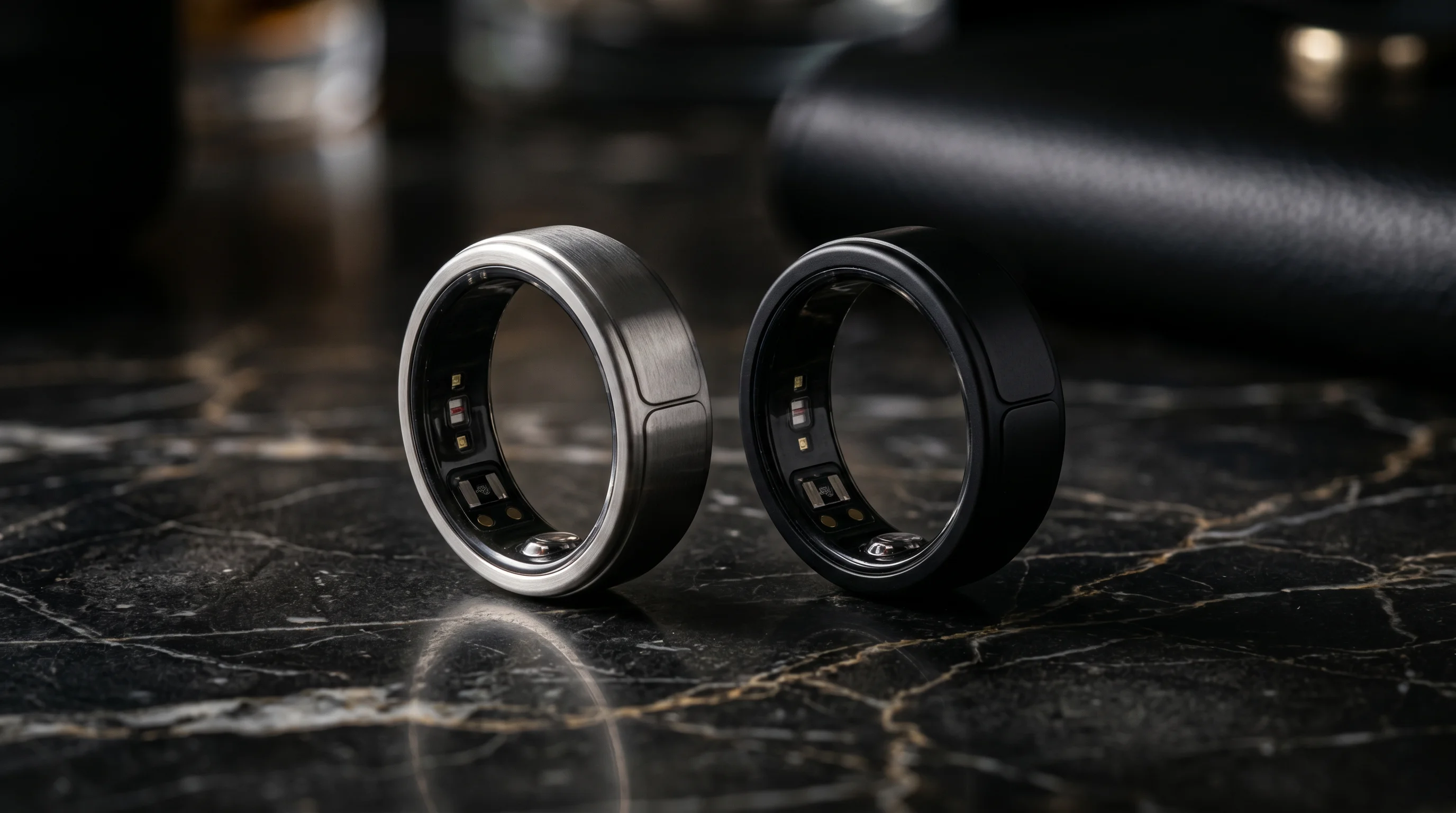
Oura and Samsung represent two distinct philosophies in smart ring design. Here's how they differ — and which one is right for your health goals.
By AI Wearable Hub Editorial Team · Published · Updated
Affiliate Disclosure: AI Wearable Hub participates in the Amazon Associates program. Links on this page may earn us a commission at no extra cost to you. All editorial opinions are independent.
Quick Verdict
Choose the Oura Ring Gen 3 if sleep science, HRV accuracy, and the most detailed biometric data are your priority — especially if you're not tied to the Samsung ecosystem. Choose the Samsung Galaxy Ring if you're a Galaxy smartphone user who wants solid health tracking without committing to a monthly subscription. Both are excellent smart rings; the right choice comes down to ecosystem fit and whether you mind the ongoing cost.
The Core Difference in Philosophy
Oura and Samsung built their rings around different assumptions. Oura built a health research device first — it was used in COVID-19 studies and professional sports before consumer demand grew — and wrapped it in consumer packaging later. Samsung built a consumer wellness product with the Galaxy ecosystem in mind, prioritizing seamless integration with Galaxy Watch and Galaxy phones over sensor depth.
Neither philosophy is wrong. But they lead to products that suit different users.
Sleep Tracking: Where Oura Still Leads
Sleep tracking is where the Oura Ring's research heritage shows most clearly. The Gen 3's sleep staging algorithm distinguishes between light, deep, and REM sleep with accuracy that independent studies have validated against clinical polysomnography — the gold standard for sleep measurement. It tracks sleep timing, latency, restfulness, and overnight heart rate in granular detail, then translates it into a Sleep Score that's meaningfully predictive of how you'll feel and perform.
Samsung Galaxy Ring's sleep tracking is solid but less granular. It captures sleep stages and provides an Energy Score, and the snore detection feature is unique in the ring category. For most users, it's more than sufficient. For people with specific sleep concerns, training around sleep, or those working with a sleep coach or doctor, Oura's depth matters.
Health Monitoring: Different Strengths
Both rings track continuous heart rate, HRV, blood oxygen, and skin temperature. Oura's HRV measurement is historically more precise, with a more sensitive sensor and longer validation history. Samsung's Galaxy Ring adds menstrual cycle tracking with a dedicated algorithm, and its integration with Samsung Health allows combined ring-plus-watch analytics if you wear both.
One significant practical point: the Galaxy Ring lacks a green LED sensor for activity tracking during workouts, relying instead on red and infrared sensors. This means it's primarily a passive health monitor rather than an active workout tracker — for exercise data, Samsung expects you to also be wearing a Galaxy Watch.
The Subscription Question
This is the most important practical difference for buyers to understand before purchasing:
- Oura Ring: $299 hardware + $5.99/month subscription for full data access. After 12 months: ~$370 total. After 24 months: ~$443.
- Samsung Galaxy Ring: $399 hardware, no subscription. After 12 months: $399. After 24 months: $399.
The Samsung Galaxy Ring is cheaper over any timeline longer than about 17 months. The Oura Ring's subscription funds ongoing algorithm improvements and research partnerships — the app has improved substantially since launch. Whether that's worth ~$6/month is a personal call.
Battery Life & Charging
Both rings target roughly 7–8 days of battery life, which is exceptional for always-on biometric monitoring. Real-world use typically lands at 6–7 days depending on how often you sync and whether you run Workout detection. Charging takes 60–80 minutes from empty via the magnetic charging cradles both include.
One practical note: neither ring is designed to be removed for charging often, which is part of the appeal — but you do need to remember to charge every week. Both are IP68 water resistant, so showering and swimming with them is fine.
App Experience
Oura's app is available on both iOS and Android and has matured considerably. The AI-powered Oura Advisor feature (available on higher subscription tiers) can interpret your trends and answer health questions with context from your personal data. The app UI is clean and focused on insight rather than raw data dumps.
Samsung Health is more feature-rich but more complex. It integrates data from Galaxy Watch, Galaxy Ring, and Galaxy phones into a unified dashboard. For Galaxy users, this integration is genuinely valuable. For non-Samsung Android or iPhone users, the experience degrades — some features are Galaxy-exclusive.
Who Should Buy Which
Choose Oura Ring Gen 3 if you:
- Have specific sleep quality concerns or work with a sleep coach
- Train seriously and want recovery data to guide your effort levels
- Use an iPhone or non-Samsung Android phone
- Value the most accurate HRV and temperature data available in a ring
Choose Samsung Galaxy Ring if you:
- Own a Galaxy smartphone and want tight ecosystem integration
- Want to avoid ongoing subscription costs
- Already use a Galaxy Watch and want complementary passive monitoring
- Need menstrual cycle tracking with dedicated algorithm support
Prices shown are from Amazon and may change. Smart ring subscriptions are subject to change by manufacturers.
Products Covered
- Oura Ring Gen 3 — $339.00 by Oura
- Samsung Galaxy Ring — $399.99 by Samsung
Amazon links are affiliate links (paid links). As an Amazon Associate we earn from qualifying purchases.
Frequently Asked Questions
Does the Oura Ring require a subscription?
Yes — the Oura Ring Gen 3 requires a $5.99/month (or $69.99/year) subscription to access your health data beyond the first month. The Samsung Galaxy Ring has no subscription requirement, giving it a meaningful long-term cost advantage.
Which smart ring is more accurate for sleep tracking?
Independent studies consistently place Oura Ring Gen 3 closer to clinical polysomnography for sleep staging accuracy. Samsung Galaxy Ring's sleep tracking is solid for general wellness purposes but less granular in REM and deep sleep differentiation.
Can I wear a smart ring in the shower or swimming pool?
Both the Oura Ring Gen 3 and Samsung Galaxy Ring are IP68 water resistant, meaning they're safe for showering, swimming in pools, and brief submersion. Neither is rated for deep scuba diving.
How do I find my ring size for a smart ring?
Most smart ring brands offer a free sizing kit (a set of plastic ring sizers in different sizes) that you can order before buying. Wear the sizer for 24 hours — including overnight — since fingers swell slightly during sleep, and smart rings are worn continuously.